
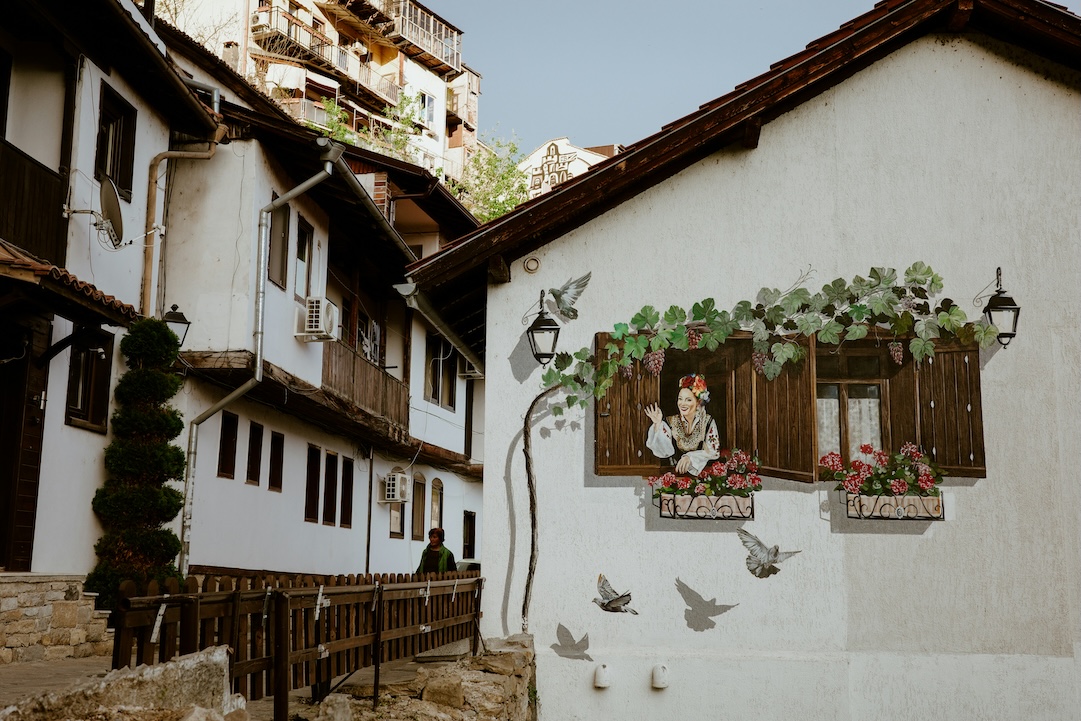
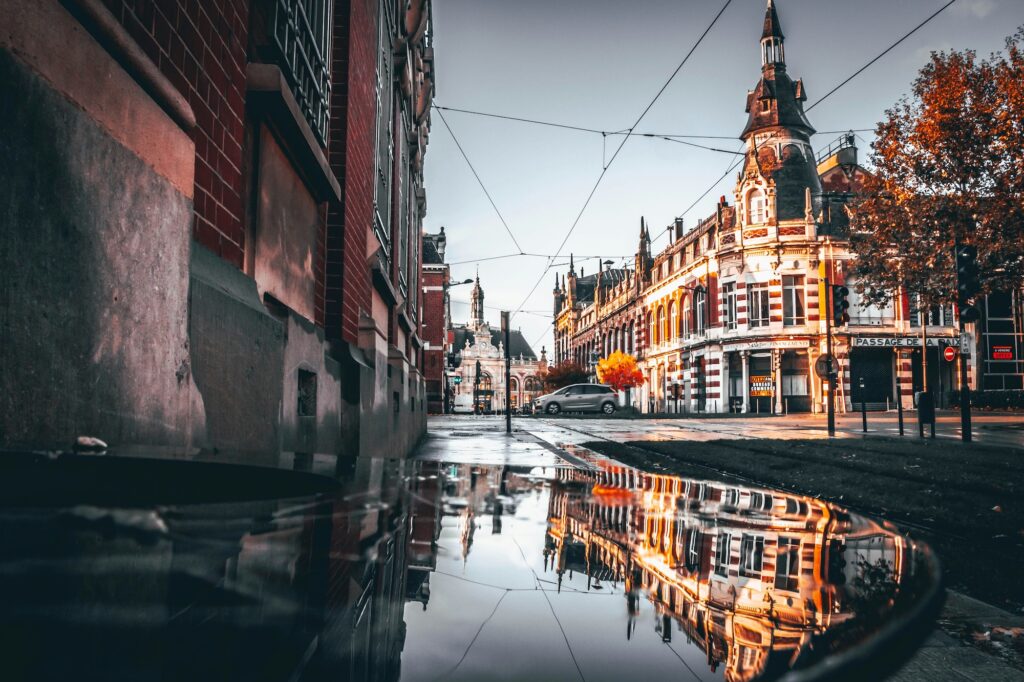
Born in Valenciennes and held captive in Tarnovo more than eight centuries ago, Baldwin of Flanders provides an unexpected historical link between France and Bulgaria. Could this shared history become the foundation of a modern friendship between the two cities?
At first sight, there seems to be little connecting Valenciennes, in northern France, and Veliko Tarnovo, the medieval capital of Bulgaria.
Nearly 2,000 kilometres separate them.
One belongs to a region deeply shaped by coal mining, steelmaking and Europe’s industrial revolutions. The other rises above the winding Yantra River and remains one of the strongest symbols of the medieval Bulgarian state.
And yet, one man has connected the histories of these two cities for more than 800 years:
Baldwin of Flanders and Hainaut.
He was born in Valenciennes.
He ended his life as a prisoner in Tarnovo.
Today, this extraordinary historical connection could provide the foundation for a meaningful twinning between Veliko Tarnovo and Valenciennes.
From Valenciennes to Tarnovo: the extraordinary life of Baldwin
Baldwin was born in Valenciennes in 1171.
He later became Baldwin IX, Count of Flanders, and Baldwin VI, Count of Hainaut.
His destiny, however, would take him far beyond the borders of medieval France and the Low Countries.
Baldwin participated in the Fourth Crusade, which ultimately led to the capture of Constantinople by the Crusaders in 1204.
Following the creation of the Latin Empire of Constantinople, Baldwin was elected its first emperor and crowned Baldwin I, Latin Emperor of Constantinople.
His reign would be remarkably short.
On 14 April 1205, the forces of the Latin Empire confronted the army of Bulgarian Tsar Kaloyan at the Battle of Adrianople, near present-day Edirne in Turkey.
The battle ended in a major Bulgarian victory.
Baldwin was captured.
The emperor was taken as a prisoner to Tarnovo — today’s Veliko Tarnovo — then the capital of the Second Bulgarian Empire.
He died in captivity, probably in 1205 or 1206.
The precise circumstances surrounding his death remain uncertain, and medieval chronicles provide several different versions of what happened.
What is certain is that Baldwin, born in Valenciennes, was captured by Tsar Kaloyan and brought to Tarnovo, where his life came to an end.
Baldwin’s Tower: a piece of Valenciennes history in the heart of Bulgaria
More than eight centuries later, Baldwin’s memory remains present in Veliko Tarnovo.
On the fortress of Tsarevets, the spectacular medieval stronghold overlooking the city, stands a monument known as Baldwin’s Tower — Балдуиновата кула in Bulgarian.
According to tradition, Baldwin was imprisoned there after his capture.
Whether the present tower corresponds exactly to the location where the emperor was held is less important than what it represents today.
A man born almost 2,000 kilometres away in Valenciennes has become part of Veliko Tarnovo’s historical landscape.
Thousands of Bulgarians and foreign visitors pass Baldwin’s Tower every year.
Yet how many people in Valenciennes know that the name of their medieval count can still be found on one of Bulgaria’s most famous historical sites?
And how many people in Veliko Tarnovo realise that Baldwin came from a French city that still exists today and could become a natural partner for their own?
This is precisely where history can become something more than history.
A personal example: Pontcharra and Rovasenda
The idea of using a historical figure to create a relationship between two European cities is not theoretical.
I grew up in Pontcharra, a small town in the French Alps.
Pontcharra was the birthplace of Pierre Terrail, better known as the Chevalier Bayard, one of the most famous French knights of the Renaissance.
Bayard died in Italy in 1524, during the Italian Wars, not far from Rovasenda in Piedmont.
Centuries later, this shared history helped bring the two towns together.
Pontcharra and Rovasenda officially became twin towns in 1973.
More than fifty years later, the partnership is still alive.
Over the decades, French and Italian schoolchildren have travelled to each other’s towns. Associations, sports clubs and families have met. Cultural events have been organised and personal friendships created.
What began with the story of a knight who lived five centuries ago became something very contemporary:
Europeans meeting other Europeans.
The same thing could happen between Valenciennes and Veliko Tarnovo.
Four reasons why a Veliko Tarnovo–Valenciennes partnership would make sense
1. Turning medieval history into living European history
The first benefit would naturally be historical and cultural.
Valenciennes could rediscover Baldwin as an important figure in its medieval past, while Veliko Tarnovo could place Baldwin’s Tower within a broader European historical context.
Museums, schools, universities and local archives could work together on exhibitions, conferences and educational projects.
Students could explore the same events from two perspectives.
For people in northern France, the story would begin with a count born in Valenciennes who became emperor in Constantinople.
For Bulgarians, it would begin with Tsar Kaloyan’s victory over the Latin Empire at Adrianople.
These are not identical historical narratives.
And that is precisely what makes the project interesting.
The goal would not be to rewrite the past or pretend that medieval French and Bulgarians were allies.
Quite the opposite.
An old conflict could become the starting point for modern cooperation.
That is, in many ways, what European reconciliation is about.
2. Creating real exchanges between young French and Bulgarian people
A twinning agreement would have little value if it consisted only of official ceremonies and photographs between municipal delegations.
Its real purpose should be to create exchanges between people — particularly young people.
Schools in Valenciennes could establish partnerships with schools in Veliko Tarnovo.
At first, this could involve simple projects:
video calls between classes, shared history projects, language exchanges and correspondence between pupils.
Later, these relationships could develop into school trips.
Imagine French children arriving at Tsarevets and standing beside Baldwin’s Tower while discovering that the man imprisoned there was born in their own hometown.
Bulgarian pupils travelling in the opposite direction would discover Valenciennes, northern France and a European region very different from the image of France normally presented abroad.
The partnership could eventually extend to higher education.
Veliko Tarnovo is home to St Cyril and St Methodius University of Veliko Tarnovo, while Valenciennes has its own university and higher-education ecosystem.
Student exchanges, Erasmus projects and academic cooperation could therefore become another dimension of the relationship.
3. Helping French and Bulgarian people discover lesser-known parts of Europe
France and Bulgaria belong to the same European Union.
Yet knowledge between their populations remains surprisingly limited.
For many French people, Bulgaria remains one of Europe’s least-known countries.
Veliko Tarnovo would be an exceptional place from which to discover it.
Visitors would experience Tsarevets, the Yantra Valley, monasteries, villages, Balkan landscapes, Bulgarian cuisine and the history of the Second Bulgarian Empire.
They would discover a Bulgaria very different from the stereotypes that still exist in Western Europe.
The journey in the opposite direction would be just as interesting.
Bulgarian visitors could discover a side of France rarely presented abroad.
Not Paris.
Not the French Riviera.
But the industrial and cultural heritage of northern France.
They could visit Valenciennes, Lille, the former mining basin, historic industrial sites and a region whose development played an important role in European industrial history.
The two cities could therefore act as gateways to their wider regions.
Veliko Tarnovo could introduce French visitors to central and northern Bulgaria.
Valenciennes could introduce Bulgarian visitors to the Hauts-de-France region and neighbouring Belgium.
Tourism offices, cultural organisations and local businesses could all benefit from these new connections.
4. Connecting two territories thinking about the economy of tomorrow
The economic dimension could ultimately become one of the most interesting parts of the partnership.
Valenciennes belongs to a territory profoundly shaped by industrialisation.
Coal mining, steelmaking, metallurgy and manufacturing transformed northern France during the 19th and 20th centuries.
Today, the Valenciennes area remains an important industrial centre, particularly in the automotive and railway sectors.
At the same time, the Hauts-de-France region is trying to reinvent its economic model through Rev3 — the Third Industrial Revolution strategy.
The objective is to combine industry, energy transition, innovation, digital technologies and new models of sustainable development.
Veliko Tarnovo faces very different circumstances, but it is also thinking about its economic future.
The city and its surrounding region are seeking to attract investment, develop higher-value activities and create opportunities that can retain young people.
This could provide fertile ground for cooperation.
Business delegations, universities, engineering schools, start-ups and municipal economic-development departments could meet.
Projects could focus on subjects such as:
industrial transition, sustainable mobility, energy efficiency, tourism technologies, smart cities, entrepreneurship and European funding.
A twinning relationship that begins with medieval history could therefore become a platform for discussing Europe’s economic future.
More than another ceremonial twinning agreement
Europe already has thousands of town-twinning agreements.
Some remain extremely active.
Others have gradually been reduced to a plaque at the entrance to a town and an official delegation every few years.
A partnership between Veliko Tarnovo and Valenciennes should aim for the first model.
It should be built around concrete projects.
Every year, pupils from Valenciennes could visit Bulgaria.
Every year, young Bulgarians could discover northern France.
Historians could work together.
Universities could cooperate.
Artists could participate in festivals in the partner city.
Entrepreneurs could meet.
Tourism organisations could promote both destinations.
Families could host one another.
Over time, personal relationships would take over from institutional ones.
That is exactly what happened between Pontcharra and Rovasenda.
More than fifty years after their twinning agreement, the historical connection surrounding the Chevalier Bayard continues to generate meetings between French and Italian citizens.
There is no reason why Baldwin could not play a similar role between France and Bulgaria.
From Baldwin’s Tower to a new French-Bulgarian friendship
History sometimes creates unexpected bridges between places.
In this case, the bridge already exists.
Baldwin was born in Valenciennes in 1171.
He was captured by the Bulgarian Tsar Kaloyan in 1205.
He ended his life as a prisoner in Tarnovo.
More than eight centuries later, his name is still attached to one of the most recognisable monuments of Veliko Tarnovo.
The historical link is therefore already there.
What remains is to transform it into something useful for the present.
A partnership between Veliko Tarnovo and Valenciennes would allow two relatively little-known European regions to discover one another.
It could introduce French children to Bulgaria and Bulgarian children to northern France.
It could bring together schools, universities, historians, artists, businesses and families.
And it could transform the memory of a medieval war into something much more positive.
More than 800 years after Baldwin travelled from Western Europe to the Balkans, perhaps his story could finally bring Valenciennes and Veliko Tarnovo together — this time in friendship.
