
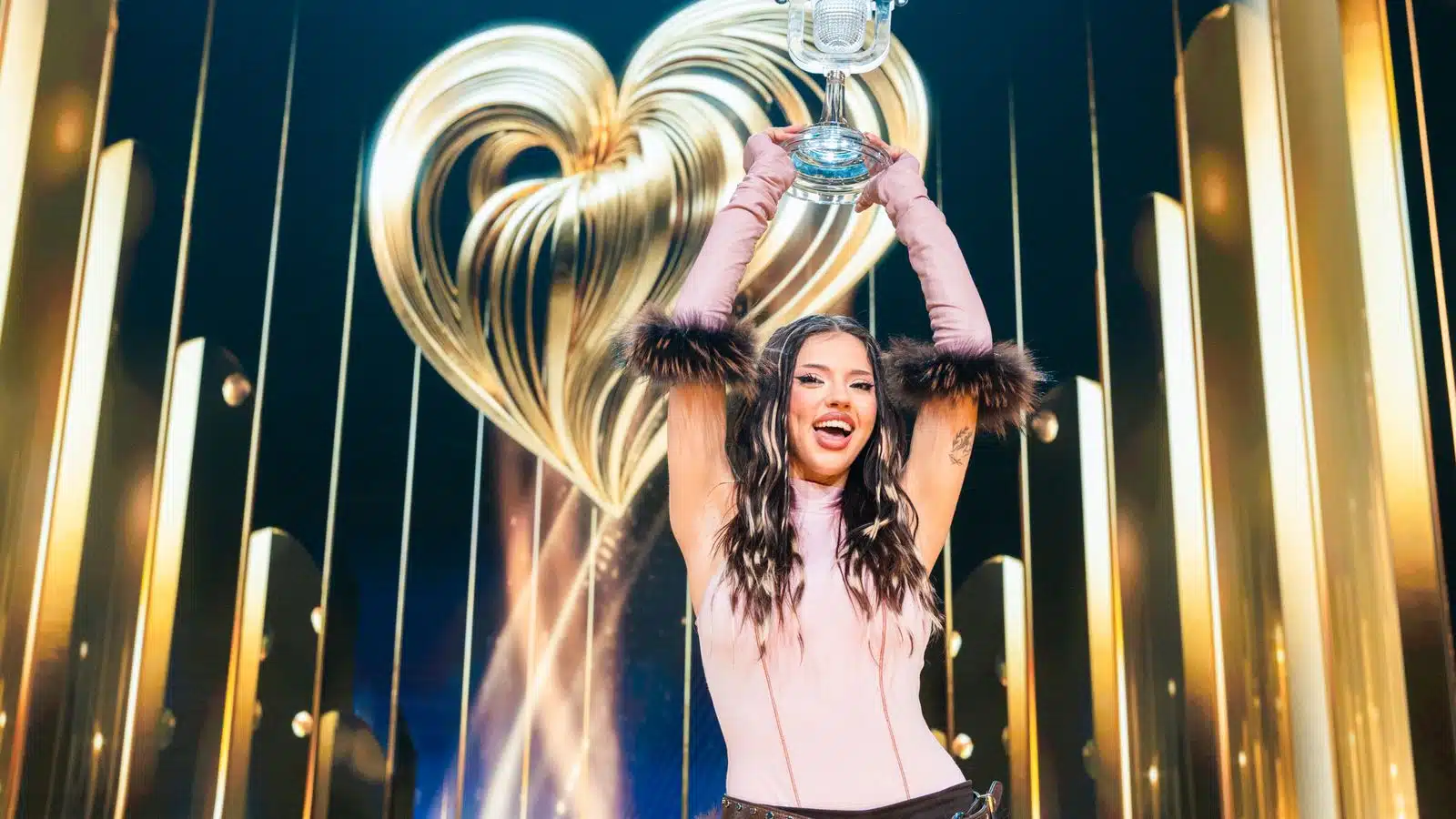
Le samedi 16 mai 2026, la Bulgarie est entrée dans l'histoire. Pour la première fois depuis qu'elle a rejoint le Concours Eurovision de la chanson, la Bulgarie a remporté l'Eurovision grâce à l'interprétation énergique et typiquement bulgare de “Bangaranga” par DARA.
Pour la Bulgarie, l'Eurovision 2026 est bien plus qu'une victoire musicale. C'est un moment de fierté nationale, de visibilité culturelle et de reconnaissance internationale - le genre d'événement qui peut changer la façon dont un pays est perçu de l'extérieur.
Après plusieurs années d'absence à l'Eurovision, la Bulgarie est revenue, non pas discrètement, non pas prudemment, mais avec une performance gagnante. Et dans un concours regardé par plus de 100 millions de personnes dans le monde, cela compte.
Un rare moment de fierté collective
Chaque pays a besoin de moments où les gens peuvent dire : “C'est nous. C'est la nôtre. Et le monde nous regarde.”
Pour la Bulgarie, la victoire de DARA à l'Eurovision est l'un de ces moments.
Bien sûr, il n'aura peut-être pas le même poids émotionnel que l'inoubliable parcours de la Bulgarie à la Coupe du monde de la FIFA 1994, lorsque l'équipe nationale de football a atteint les demi-finales et a offert au pays l'un de ses plus beaux souvenirs sportifs. Mais l'Eurovision 2026 appartient à la même famille de moments collectifs : des moments où les Bulgares du pays et de l'étranger peuvent se sentir vus, fiers et connectés.
C'est particulièrement important pour un pays dont on parle trop souvent au niveau international à travers des clichés négatifs : corruption, déclin démographique, instabilité politique, émigration, bas salaires, transition post-communiste. Ces réalités existent, bien sûr. Mais elles n'expliquent pas tout.
La Bulgarie, c'est aussi le talent, la créativité, la résilience, le folklore, la musique, le cinéma, la beauté, l'histoire, l'humour, l'énergie et la fierté. L'Eurovision 2026 l'a rappelé à l'Europe et au monde entier.
S'agit-il uniquement de la diaspora bulgare ? Et si c'était le cas : et alors ?
Certains critiques pourraient affirmer que la victoire de la Bulgarie a été favorisée par le fait que la diaspora bulgare a voté depuis l'étranger. C'est possible. Mais même si c'était en partie vrai, la réponse devrait être simple : et alors ?
Une diaspora qui vote pour son pays n'est pas un scandale. C'est un signe d'attachement. Cela signifie que les Bulgares vivant à l'étranger s'intéressent encore à leur pays. Cela signifie que l'identité n'a pas disparu. Cela signifie que, même après des années ou des décennies passées hors du pays, de nombreuses personnes se sentent encore émotionnellement liées à la Bulgarie.
Ce n'est pas une fierté artificielle. C'est la vraie fierté.
Mais dans ce cas, l'explication par la diaspora ne tient pas tout à fait. La Bulgarie n'a pas seulement remporté le vote du public. DARA a également remporté le vote du jury, ce qui rend le résultat beaucoup plus fort et légitime. “Bangaranga” n'était pas seulement un favori sentimental. Il a fait l'objet d'un consensus.
Si l'on considère les pays qui ont apporté un soutien important à la Bulgarie, il ne s'agit pas simplement de savoir où vivent les plus grandes communautés bulgares. Des pays comme l'Australie, le Danemark ou la Lituanie ne sont pas nécessairement les premiers auxquels on pense lorsqu'on évoque les plus grands centres de la diaspora bulgare. Le résultat semble donc indiquer quelque chose de plus large : La Bulgarie n'a pas seulement reçu le soutien des Bulgares. La Bulgarie a fait appel à l'Europe.
Le moment du soft power bulgare
C'est ici que la victoire à l'Eurovision devient intéressante au-delà de la musique.
L'Eurovision n'est pas seulement un concours de chant. C'est l'une des plateformes culturelles les plus visibles au monde. Elle crée des récits. Elle donne aux pays un moment sur la scène mondiale. Elle façonne la curiosité. Elle influence le tourisme, l'image, la réputation et la confiance culturelle.
Pour un pays comme la Bulgarie, qui est encore méconnu par de nombreux visiteurs internationaux, ce type d'exposition n'a pas de prix.
Les personnes qui n'avaient jamais prêté attention à la Bulgarie peuvent maintenant se demander : Qui est DARA ? Qu'est-ce que le “Bangaranga” ? Quelles sont ces références folkloriques ? À quoi ressemble la musique bulgare ? À quoi ressemble la Bulgarie ? Dois-je visiter Sofia ? Dois-je découvrir la côte de la mer Noire, Plovdiv, les montagnes, les monastères, les vallées roses, les villages, la nourriture, le vin ?
C'est ainsi que fonctionne le soft power. Il commence par l'émotion. Puis vient la curiosité. Puis viennent les voyages, les investissements, l'intérêt culturel et la réputation.
Un pays qui semble changer
Sans faire de politique, il est difficile de ne pas remarquer que cette victoire intervient à un moment particulier pour la Bulgarie.
Le pays a récemment connu un changement politique majeur, les dernières élections législatives ayant donné lieu à une majorité plus claire que la Bulgarie n'en avait connue depuis de nombreuses années. Après une longue période d'instabilité, d'élections répétées et de gouvernements fragiles, de nombreuses personnes espèrent une phase plus stable.
Il reste à voir si cet espoir sera justifié. La stabilité politique sur le papier ne résout pas automatiquement les profonds défis institutionnels, économiques ou démographiques. Mais le symbolisme compte. Et à l'heure actuelle, la Bulgarie semble connaître une vague rare de renouveau de l'énergie nationale.
L'Eurovision n'a pas créé cette vague. Mais elle l'exprime.
La Bulgarie brille aussi à Cannes
Et l'Eurovision n'est pas le seul endroit où la Bulgarie est visible ce mois-ci.
Lors du Festival de Cannes 2026, l'une des manifestations culturelles les plus prestigieuses au monde, “L'aventure rêvée” de Valeska Grisebach concourt pour la Palme d'or. Le film a été tourné en Bulgarie, en langue bulgare, avec des acteurs bulgares, et se déroule dans la région frontalière du pays.
Selon les informations culturelles bulgares, c'est la première fois depuis 1972 qu'un film bulgare est en compétition à Cannes.
C'est extraordinaire.
Le même mois, la Bulgarie remporte l'Eurovision pour la première fois et réapparaît dans la compétition officielle de Cannes après plus d'un demi-siècle. Musique et cinéma. Culture populaire et haute culture. Public de masse et festival d'élite. Deux mondes différents, un signal commun : La Bulgarie est visible.
L'importance pour l'image de la Bulgarie
Les pays ne se construisent pas seulement par la politique et l'économie. Ils se construisent aussi à travers des histoires.
Pendant trop longtemps, l'histoire internationale de la Bulgarie a été façonnée par d'autres. Souvent par des personnes qui connaissent à peine le pays. Souvent par des stéréotypes paresseux. Souvent par des images dépassées de l'Europe de l'Est.
Mais des moments comme l'Eurovision 2026 permettent à la Bulgarie de raconter une autre histoire.
Une histoire de créativité. Une histoire de confiance. Une histoire de profondeur culturelle. L'histoire d'un pays qui ne se contente pas de “rattraper” l'Europe, mais qui lui apporte quelque chose d'original.
Et pour ceux d'entre nous qui vivent en Bulgarie, qui aiment la Bulgarie, qui visitent la Bulgarie ou qui écrivent sur la Bulgarie, c'est le genre de moment qu'il ne faut pas sous-estimer.
Parce que la visibilité crée des opportunités. La fierté crée l'élan. Et l'élan, lorsqu'il est bien utilisé, peut se transformer.
Aller en Bulgarie
La victoire de DARA n'est pas seulement un trophée. C'est un signal. Un signal pour les Bulgares que leur culture peut voyager. Un signal à l'Europe que la Bulgarie a quelque chose de puissant à offrir. Un signal au monde que ce pays mérite plus d'attention qu'il n'en reçoit habituellement.
Alors oui, certains analyseront le vote. D'autres minimiseront le résultat. Certains diront que c'est la diaspora. D'autres diront que c'est la politique. Certains diront que c'est la chance. Peut-être. Mais parfois, un pays a simplement besoin de profiter de son moment. Et celui-ci appartient à la Bulgarie.
Allez la Bulgarie !
En savoir plus : Suivez Dara sur Instagram
Lire notre derniers articles sur le blog.
